
Backend & AI Systems Engineer

Hello, I’m

Bence
Molnár

I build backends, AI integrations and automation that take repetitive work off your team.

Co-founder of FlowSolutions · Budapest, Hungary

Backends, AIand automation.

I build the backend your product runs on, connect the AI providers and messaging channels your team already uses, and keep it running in production. Backend-first, with full-stack ownership when the product needs it.

  • Backends & APIs

    Production backends in Go and Node.js: authentication, subscriptions and Stripe payments, MongoDB or SQL databases, concurrent workflows. Tested, containerised and deployed.

  • AI integrations

    OpenAI, Anthropic and Gemini built into real workflows: personalised messages, lead qualification and decisions your team would otherwise make by hand.

  • Messaging channels

    One backend for every conversation: WhatsApp, SMS, email and Gmail, Messenger, Instagram, X and Telegram.

  • Automation & internal tools

    Scheduled reports, CRMs, Shopify and legacy-system sync, and data pipelines that remove repeated manual work.

Co-founder & Lead Backend Developer · 2025–present

LeadOps.

Many conversations.
Outreach that follows your workflow.

Explore LeadOps
The company behind LeadOps, LeadGen and Facebook Stats

FlowSolutions.

Co-founder & Backend Developer · 2025–present

At FlowSolutions, we build custom software, automation and practical AI tools around operational problems—connecting systems and removing work that people should not have to repeat.

  • LeadOps Follows up your leads and runs your messages from one place.
  • LeadGen Finds every business in your niche, anywhere on the map.
  • Facebook Stats Watches your clients’ Facebook ads and sends their reports.
Visit FlowSolutions

Independent workflows. One connected system.

The problem

Attention doesn’t scale.
Systems can.

LeadOps helps businesses and agencies manage lead outreach and qualification across multiple communication channels, reducing the manual work of personalising messages and keeping conversations organised.
The system

Create a workflow.
Keep the context.

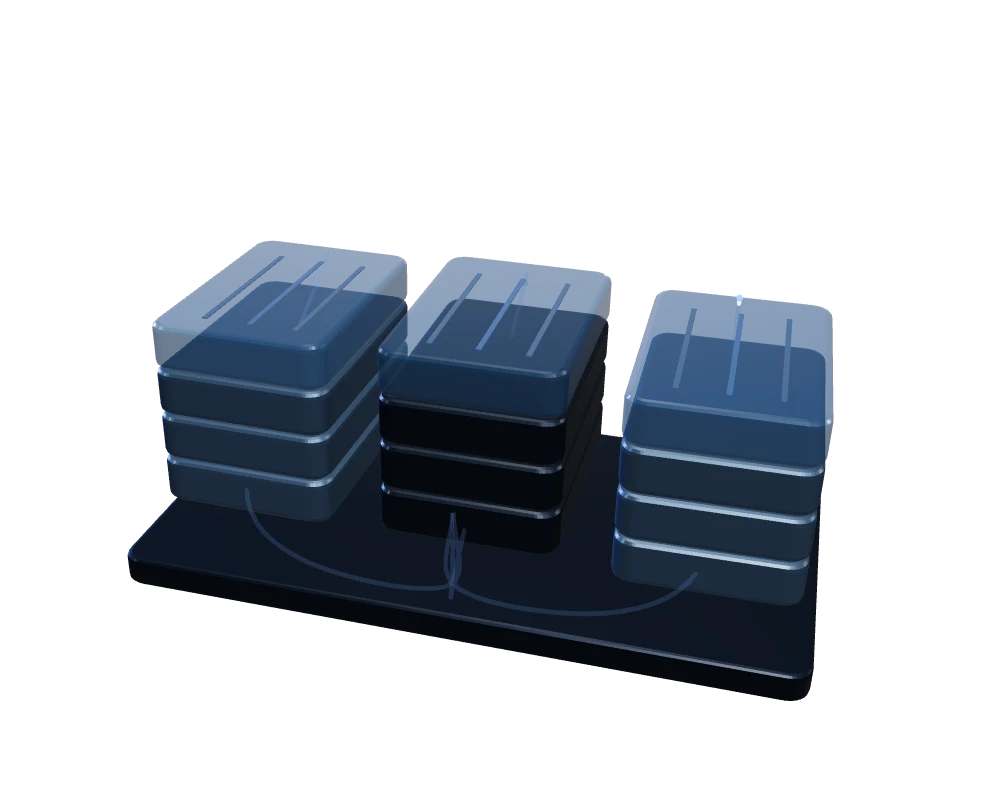
Users create workflows that contact leads and handle conversations across WhatsApp, SMS, email, Messenger, Instagram, X and Telegram. AI integrations with OpenAI, Anthropic and Gemini support personalised exchanges and help identify which leads may be relevant to the business.

My responsibility

The backend.
And what keeps it running.

I built the Go and MongoDB backend and worked across architecture, concurrent processing, messaging and AI-provider integrations, authentication, subscriptions, Stripe payments, testing and deployment.

Engineering scope +

Concurrent workflows

I built the Go backend, with MongoDB for storage, around concurrent processing, supporting multiple outreach workflows and conversations at the same time. The work involved coordinating these activities as part of a production product, beyond handling an individual message or request.

Messaging and AI integrations

I connected the messaging channels (WhatsApp, SMS, email and Gmail, Messenger, Instagram, X and Telegram) and the AI providers (OpenAI, Anthropic and Gemini) to the application, as independently running integration services that support personalised outreach, qualification and ongoing conversations.

Authentication and access

My scope included authentication, API security and access control. These responsibilities connect how people enter the product with which application capabilities they can use, alongside the backend's other production concerns.

Subscriptions and payments

I worked on subscriptions and Stripe payments as part of the product backend, connecting paid access with the application's commercial functionality.

Testing and delivery

The responsibility continued through testing, Docker and deployment. I worked across the application and its independently running integrations to prepare and operate the production system.

Products, pipelines,CRMs and integrations.

01Own product · 2026–present

PaceLab

A training diary for runners that works out which session you actually ran, such as 6 × 800 m with 400 m recoveries, instead of only showing what the watch recorded. A Go API and worker pipeline, MongoDB, an Android app, and AI explanations that may only cite numbers the code has already calculated.

Go · MongoDB Atlas · OpenAI · Android (.NET MAUI) · Garmin FIT

About the system +

Problem

A running watch records everything except what the session was. It stores laps and seconds, not “6 × 800 m with 400 m recoveries”. Comparing sessions or following progress on a specific workout means rebuilding that structure by hand, and missed lap presses make it worse.

Approach

PaceLab works the run out in code first. An import goes through a queued pipeline that normalises the data, recognises the workout type and rebuilds the intervals from the lap markers and the second-by-second record, including missed lap presses and mixed sets. AI only explains results that are already computed: the model must cite PaceLab’s own facts, and answers citing anything else are rejected.

How it works

The Android app uploads FIT, GPX or TCX files (or syncs from Garmin Connect, an experimental connector) and reads the diary through a documented REST API. The Go API stores the original file and queues a job in MongoDB. A separate worker then detects, reconstructs and analyses the run, and groups it into a session with warm-up, main set and cool-down. Live updates reach the app over server-sent events. On top of that sit training load and trends, comparison with similar past workouts, planned workouts with plan-versus-actual scoring, and export to Garmin-compatible FIT workout files.

My contribution

I designed and built all of it: the Go API and worker, the data model, the detection and interval reconstruction, the AI grounding, the Android app and the deployment (Docker, Caddy, MongoDB Atlas). It is my own product, and the app also served as a university mobile programming project. It runs in production for a closed group of testers, with a regression suite built on 19 real Garmin activities.

  • Go
  • MongoDB Atlas
  • OpenAI
  • Android (.NET MAUI)
  • Garmin FIT
workout types recognised
11
documented API operations
153
02Freelance · client project · 2024

Real-time Solana Data Pipeline

A private system built for a client that ingests newly launched Solana tokens in real time, runs each one through multiple filtering strategies and executes automatically when a strategy’s conditions are met.

Real-time data processing · Automation · Solana infrastructure

About the system +

Problem

New Solana tokens launch continuously, and every one is a data point to inspect. Following each arrival by hand, evaluating it and deciding whether it fits a strategy turns research into repetitive work. The challenge was to turn that into one reliable, automated pipeline.

Approach

I built the system as a pipeline. Ingestion, analysis and multi-strategy filtering run as stages of the same process, so a candidate that passes the filters can move straight on to execution when the configured conditions are met.

How it works

New tokens enter an observation stage, pass through analysis and strategy filters, and may become execution candidates. The system talks directly to Solana infrastructure, and execution follows the configured strategy conditions.

My contribution

I built the system end to end as freelance work; the client supplied the market insights behind the strategies. My work covered the data processing, strategy automation and the integration with Solana infrastructure. More than 1,000,000 tokens have been analysed or filtered, and the pipeline has run continuously for more than a year.

  • Real-time data processing
  • Automation
  • Solana infrastructure
tokens analysed
1,000,000+
in operation
1+ year
03Freelance · client confidential · 2025

Operations CRM

An internal operations platform for a renewable-energy company, built around the way its team actually works.

Business workflows · Documents & PDFs · Excel import

About the system +

Problem

An installation business needed a better way to manage customer jobs, orders and the documents belonging to them. Project information had to remain connected as a job moved from selecting installation items to preparing a quotation and creating an invoice.

Approach

I worked on an internal operations platform organised around that existing business workflow. The application brings the records and document tasks into one place, rather than asking the team to treat each step as a separate piece of administration.

How it works

Users create customer job and project records, select the equipment or items used in an installation, and prepare quotations and invoices. Documents can be saved as PDFs. Historical records can also be imported from Excel, so previous work remains accessible alongside new jobs.

My contribution

The project connected ordinary operational tasks into usable business software: project and order management, installation items, documents and historical-data import. The client identity and private implementation details remain confidential.

  • Business workflows
  • Documents & PDFs
  • Excel import
04

Facebook Stats

Watches clients’ Facebook ads and sends their reports on schedule through Telegram.

Meta API · Telegram · Scheduled reporting

About the system +

Problem

Checking familiar advertising numbers meant repeatedly opening Meta Ads Manager. Agencies also needed to send recurring updates to their clients.

Approach

I developed the backend for configurable reports that bring selected advertising statistics into a scheduled delivery workflow.

How it works

Users configure reporting around relevant metrics, including spend, leads and performance measures. The system prepares periodic reports and can deliver them through Telegram, including configured client updates.

My contribution

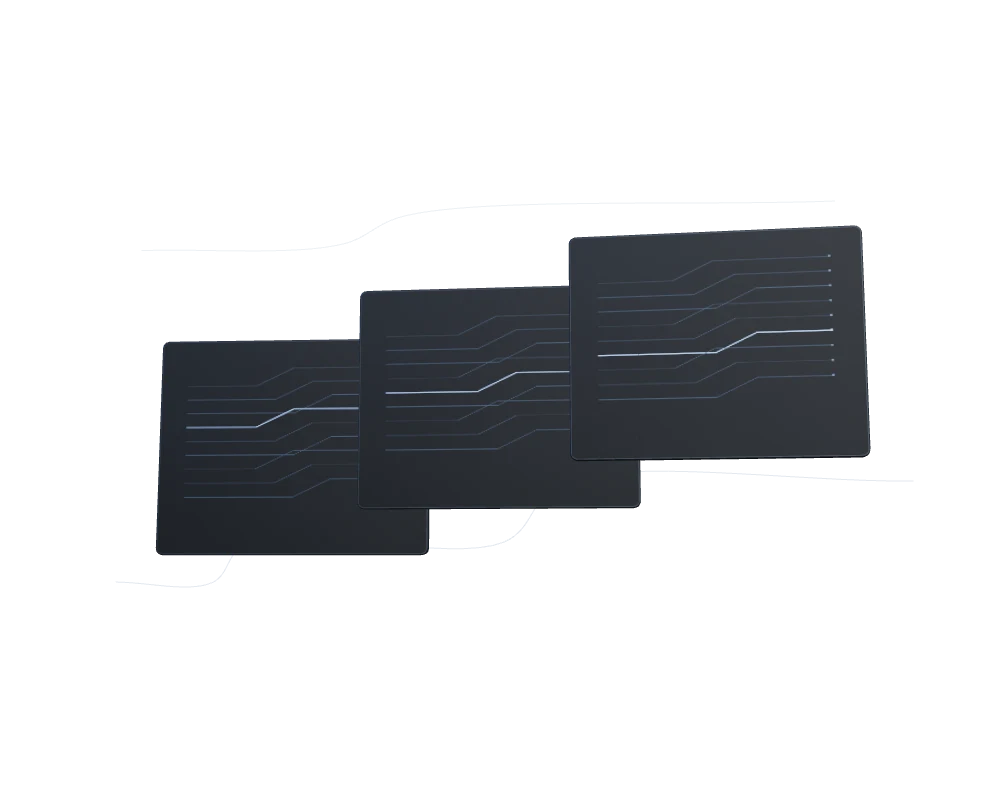
Facebook Stats is one of FlowSolutions’ products, and I built its backend: the advertising data, report configuration and recurring delivery. The illustration uses synthetic chart values to show the process, not customer results.

  • Meta API
  • Telegram
  • Scheduled reporting

Shopify Integration

Connecting Shopify orders with an existing company system.

Shopify · Legacy systems · Synchronisation

About the system +

Problem

A new Shopify store needed to work with a company system that was already in use. Keeping the two separate would leave order-related information to be entered repeatedly.

Approach

I connected the new store with the existing system through an integration that translates the relevant data between them.

How it works

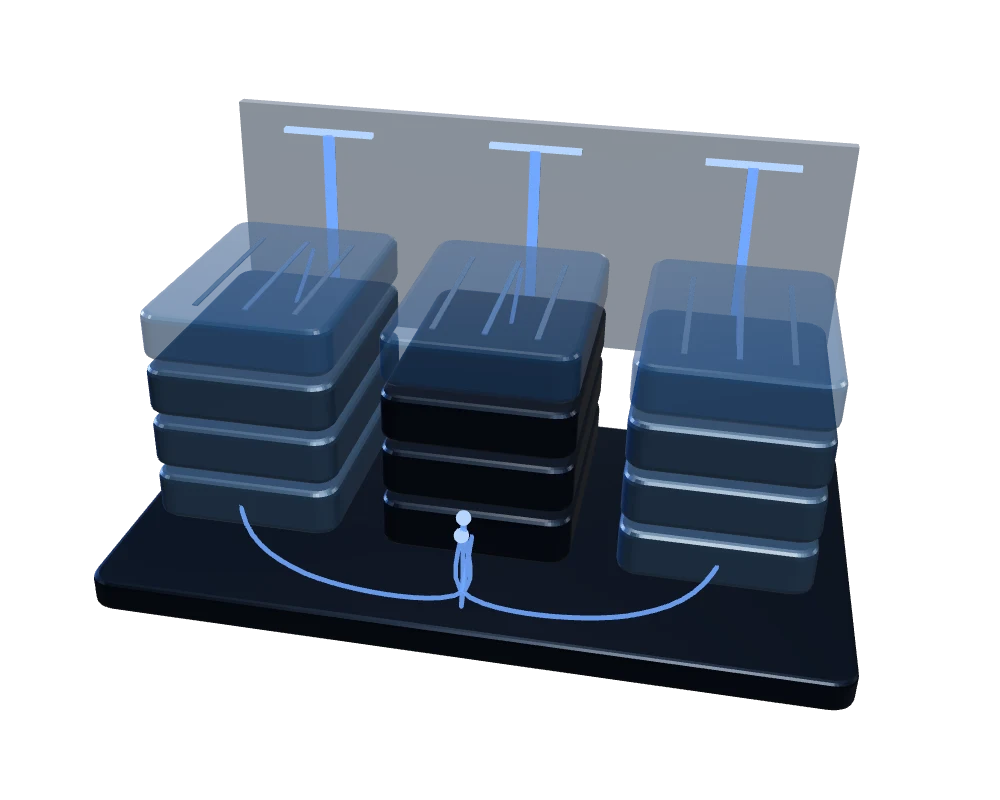
Order-related information passes through a mapping step so it can be used by the existing company workflow. The illustration follows a representative order into that system.

My contribution

My work focused on data translation and order-workflow automation, making the new software fit the existing infrastructure and reducing repeated manual entry.

  • Shopify
  • Legacy systems
  • Synchronisation

From first callto production.

From a new backend to an automation that fits your existing tools.

01

Understand the problem.

We start with what you need built, who will use it and the tools already in place. A useful system starts with a clear problem.

02

Choose the right pieces.

I build a new backend, connect the products you already use or develop the interface around them. The stack should fit the work and the people maintaining it.

03

Build it into your workflow.

I connect the application logic, integrations and automation, then deploy it and keep it running. For larger projects, we work as a team at FlowSolutions.

Backends
Go · Node.js · Python · C# · PHP
Data
MongoDB (Atlas, GridFS) · PostgreSQL · MariaDB · SQLite
APIs
REST · WebSockets · Server-sent events · OpenAPI
AI providers
OpenAI · Anthropic · Gemini
Channels
WhatsApp · SMS · Email & Gmail · Messenger · Instagram · X · Telegram
Payments & commerce
Stripe · Shopify · Meta Ads API
Infrastructure
Docker & Compose · Caddy · Linux · Shell scripting
Testing & CI
Automated tests · GitHub Actions
Interfaces
TypeScript · JavaScript · HTML · CSS · .NET MAUI

A habit ofmaking things easier.

Small tools for recurring problems.
And a little curiosity.

YouTube downloader

Search, channel browsing and format selection, with an interface that adapted to the video’s thumbnail—even its favicon.

A closer look +

An early personal project, built before modern AI coding assistance became common. It supported available download formats and high resolutions, dynamic thumbnails and content filtering.

Linux environment restoration

Backup, reinstall, synchronise and restore. Scripts that bring substantial parts of my working environment back together.

A closer look +

Configuration and browser state are part of the restoration workflow. Smaller tools handle recurring annoyances too, including authenticating against Wi-Fi captive portals.

Community automation

Discord bots, personalised meetup invitations and bridges that bring posts and messages between platforms.

A closer look +

Small, focused utilities for community workflows: keeping information in the right place and taking repetitive steps out of everyday tools.

Backend-first, comfortable with the full product. Frontend work includes Your NFT Portrait ↗

Beyondthe work.

I’m lucky.

Calculated luck, that is. From the outside, results can look like luck; behind them is the work that raised the odds. For me that means a lot of work, day and night, weekends and holidays included, with a system behind it. If a result still doesn’t come, the product needs work, not more luck. I build software the same way: tests, measurements and enough attempts that the good result becomes the likely one.

Óbuda University.

I’m studying for a BSc in Computer Science Engineering at Óbuda University, specialising in artificial intelligence, and expect to graduate in winter 2027/28. Alongside my studies, I build backend systems, integrations and automation at FlowSolutions and in my own projects.

Languages: Hungarian (native), English (B2, iTOLC), German (B2, Goethe-Institut). I work in English with most clients, and in Hungarian.

Middle-distance running.

Away from software, I’m a middle-distance runner, mainly racing the 800 m and 1500 m.

PaceLab, the training diary I built for it
800 m
2:03.79
1500 m
4:17.18

Watches.

I’m obsessed with watches: a movement is engineering you can hold in one hand, and the best designs still look right decades later. It’s the standard I want my software to meet. The dial shows the time in Budapest, where I work.

molben.BUDAPEST
A 3D athletics track: eight terraced lanes, with a light running lane one
Two laps of lane one: the 800 m. Drag to turn it.

Have somethingworth building?

Tell me what you’d like to build or automate: a new backend, an AI integration or a workflow that fits your existing tools. For larger projects, we work as a team at FlowSolutions. I work in English and Hungarian.

Identity side. Bence Molnár, Backend & AI Systems Engineer.

Where to?

Press Escape to close.